
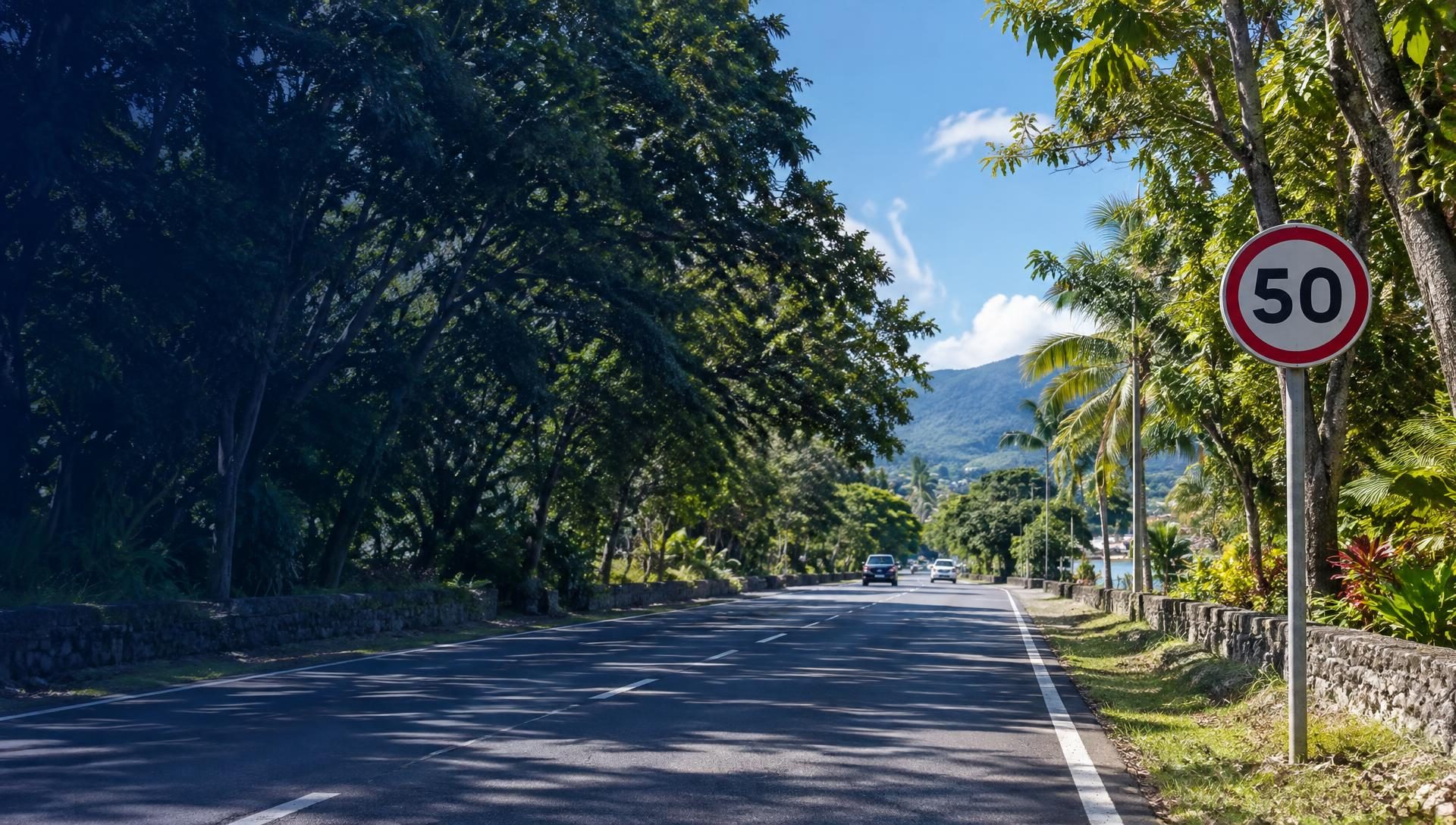
2026 AI for Safer Roads Challenge Finalist
Where should a speed-limit review start?
Turning road data into transparent review priorities.
SpeedTruth screens road segments to help identify review priorities using speed data, road context, exposure, and available street-level imagery. For each one it also names the legal instrument that set the limit and the office that can change it, so the output is a review a named authority could act on rather than a ranking.
Open it
Review queue
The planner-facing tool. Filter the network to a work list, open one unit as an evidence card, read who can lawfully change its limit, export a field-check list with a coordinate per line.
hildahanyuwang.github.io/speedtruth/app/
Findings and maps
The headline figures, the decision maps, the written chapters, and the method and sources behind each number.
hildahanyuwang.github.io/speedtruth/
No account, no licence, nothing to install.
The legal layer
A ranking does not say which rule applies, or who can change the number.
- 17.
- instruments traced across two jurisdictions
- 16.
- obtained, most as gazette originals
- 1.
- not obtained, and it names who holds the power
Each limit was traced back to the instrument that set it and the office with statutory power to change it. Seventeen instruments were read across the two jurisdictions, from the Acts, the ministerial regulations and the gazette originals, and sixteen were obtained. The one that could not be obtained is the one that matters most: India's Motor Vehicles Act lets a state government, or an authority it authorises, fix speed limits without naming an office, and Maharashtra's own departmental manual restates the power and names no office either. The notification that would name them exists, and its number is known only because a later Mumbai police order cites it. Until a copy is in hand, the register records the responsible office for those roads as unconfirmed rather than guessing one.
What we examined
14,711
Road segments screened across two very different road networks.
Thailand + Maharashtra
That is about a fifth of the 69,966 segments supplied. The rest carried no usable speed data and was excluded from scoring — disproportionately the local and rural roads where people on foot are most exposed, so the picture understates network-wide risk rather than overstating it.
3,537 segments (≈24%) of the screened segments had street-level imagery available for a scored check — roughly 5% of the full supplied network.
What changed
The imagery check moved 1,736 segments.
How the review works
- 01
Identify
Find roads that warrant closer examination.
- 02
Trace
Examine available evidence and applicable legal instruments.
- 03
Route
Identify questions and possible responsible authorities for local review.
A review-support workflow — not a legal verification service. Any decision rests with the responsible local authorities.
About
Built by Hanyu Wang for the 2026 AI for Safer Roads: Safer Speeds Innovation Challenge, where it was one of four finalists from 46 submissions across 15 countries, and the only single-person team. A personal project, not affiliated with any employer.
The speed data behind the analysis was supplied under a data agreement and is not redistributed. What is published is the derived output only — classifications carrying no coordinates and no speed value, aggregated maps, and summary statistics. The method, the code and the legal register are open.
Collaboration
I am looking for people with practical experience in speed management.
The most useful next step would be to work through a small set of roads with someone who does this for a living, and test whether tracing a limit back to its instrument actually helps prepare a review. I am also interested in where work like this sits inside the organisations that commission it.
Get in touch — hello@hanyuwang.orgStay in the loop
Follow what happens next.
Occasional updates on SpeedTruth's research, public demos, and potential pilot opportunities. Only when there's something worth sharing.
Your email and consent record are stored privately and used only for manually sent project updates. No automatic emails are sent.